Wednesday, January 11, 2017

Two Cents; Issue 8; Rab Guide Glove; WAD Tested


A medium-weight leather glove designed for hard working days in the mountains.

The Glove That Wasn't

As it turns out, the purchase of these  Rab Guide Gloves was a honest mistake that has worked in my favor. I bought these gloves as a more heavy-duty version of my Black Diamond Dirt Bags. (Click here to read the Dirt Bag review.) I did my homework and figured these were a good balance between functionality and affordability.  The price point falls around $100 dollars depending on the source, time of year, sales, etc. I took them on my NOLS trip and have worn them skiing many times.  While they did not do what I hoped they would, they have done more of the heavy lifting than I thought was possible.


Pros:

  • Durable 
    • Leather construction 
  • Cuff Design
  • Compact
  • Economically Friendly

Cons:
  • Cold 
  • Cuff Design
  • No room for liner gloves

Comfort

The first time I put these gloves on they felt a little stiff but have since softened up and now fit my hand perfectly. I wear them most days that I ski, and am well pleased with their breath-ability; they are perfect for the average winter day in Colorado. They truly feel as if they are an extension of my hand. I wear them skiing 9 days out of 10.

  • 10 out of 10 for comfort 

Durability 

When I decided to invest in another pair of gloves, I wanted something that I knew was going to last. My previous pair, Dakine's, fell apart after a season's use and the synthetic material failed; leather was the obvious choice. They look almost brand new even after having skied with them for a normal length season, as well as using them on my NOLS trip to climb glaciers in the Canadian wilderness last summer. I have applied leather food and bee's wax to keep them conditioned, but I have no doubt that the leather itself is up to the challenge. The sharp edges of my skis have had no effect on either one of the palms, nor has the stitching failed or started to fray. It is easy to access my pack when I am skiing. I do not have to fight the buckles or straps and thus can keep the gloves on the entire day.

  • 10 out of 10 for durability

Dexterity 

Gloves have always been my preference over mittens as a glove does not impede the use of your hand. Not only are the Rabs comfortable, I find they do not hinder hand movements, which I appreciate very much. I easily drive my car, operate the radio, and take cards out of my wallet without removing these gloves.

  • 10 out of 10 for dexterity

Warmth

I bought these gloves as my primary cold weather gloves. The only other pair of leather gloves that I owned before this purchase was my Black Diamond Dirt Bags. I had hoped that these new gloves would be the answer to cold hands.  They were not.  I have found that they are of moderate warmth, comfortable down to around 15 degrees; anything colder and I fight a losing battle. If I am doing aerobic activity the gloves do okay, but when I am riding the chair lift from the bottom of the mountain, I find my hands to be a bit chilled. These gloves do not provide the warmth I thought they would. Persons more prone to the cold should consider another glove.

  • 2 out of 10 for warmth

Cuff Design

My favorite feature, which frustrates me at the same time, is the cuff design. The cuff expands a couple inches out from the palm, shaped like a funnel, allowing the hand to slide right in without any trouble. The design also keeps the cuffs of the wearer's jacket from sliding off the cuff. On my jackets that have a double sleeve, the cuff slides over the bottom layer and the outer shell slides over the cuff. Same story for my Carhartt work jacket; the cuffs slide nicely over the gloves.My ski shell however, a Gore-Tex Pro shell, requires serious negotiation before the Rads get into place. When I go skiing, I have many layers on beneath my shell, and have a hard time getting the gloves to sit correctly among the layers. Once they are on, the shell stays on the gloves and does not slide up my arms. they also slide over my watch, which seems insignificant, but that is a creature comfort to which I am partial.

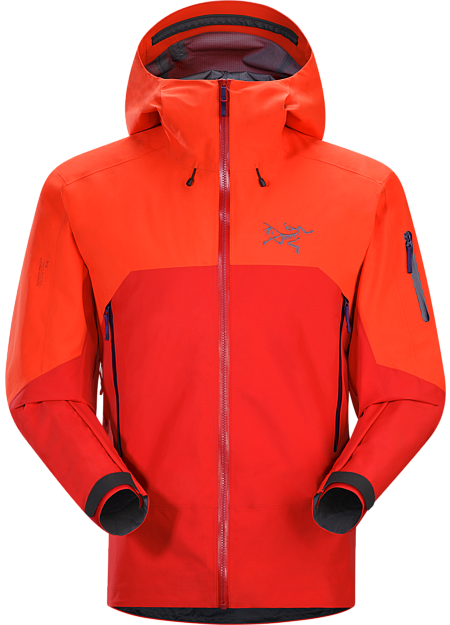
I would imagine that the cuffs would work better on a shell which was cut differently than my Arc'teryx Rush. (Click here to read my winter review.)  


Conclusion

These gloves are a wonderful mid-weight glove for high aerobic activities in weather that does not fall under the users definition of 'cold.'

I love the all leather design, and with a little TLC, the glove's durability will give you a product that will last for many years. These gloves are can be used year around in the right environment.

In my opinion, it would be very difficult to wear these gloves with liner gloves - there just isn't enough room inside. They weren't designed to incorporate liners. If your hands are cold, putting a liner glove inside of a different light winter glove is a good solution of investment. The Dirt Bag gloves would be a lighter alternative, or Kinko winter work gloves. 

This was a classic case of buyer error; I bought the wrong glove for a warm, deep-winter glove. However, it turned out to be a profitable error, and when they are worn in the correct environment, they out perform any glove that my friends wear. 


Go/No Go

I would recommend these glove for anyone looking for a durable light-weight winter glove. I give them a 7 out of 10 because the design does not allow for a liner glove to be worn, as well as the cuff challenges.  Overall though, I'm glad I bought them. 

Z

Saturday, December 24, 2016

Two Cents; Issue 6; Arc'teryx Rush; Winter Review


One Shell to Rule Them All

As it turns out one of the perks of living in the mountains is the consignment shops have outdoor gear; high quality outdoor gear and lots of it. If you want something new, or new to you, it wouldn't take one long to find it. Despite the many opportunists to purchase another shell jacket from one company or another, I have decided I do not need another shell because frankly, the shell I have does everything I need it to do. This season has been the first time I have used the Arc'teryx Rush shell jacket for it's intended purpose; skiing.

Pro's

  • Durable 
    • Gore-Tex Pro
  • Parka Length Cut
    • Snow skirt provided the extra protection that an alpine shell does not have
  • Velcro was easy to use
  • Full storm hood
    • 3 Point Adjustable
  • Easy to use pit zips
  • Large zipper pulls

Con's
  • Garment falls shorter then most skiing jackets
  • Its expensive

Conclusion

This has become my go to shell. The Gore-Tex Pro fabric puts to rest my fears about the garment ripping if it were to get snagged on something. The jacket is cut in such a way that it can be worn as a single layer on warm days while also allowing multiple layers to be worn beneath it as the temperature drops. One of the most elegant features that makes this jacket great is how the cuffs are cut. I wear both over-the-cuff and under-the-cuff gloves. The glove that I wear the most often are heavy-duty, leather, under-the-cuff gloves that are comfortable down to temperatures of 15 degrees; I wear these nine days out of ten. Because of their bulky leather cuffs, it takes some serious negotiation to get the sleeves over the gloves. However, once the sleeves are down, they form a snow tight seal around the glove, keeping the cold out, and heat in. I always carry an extra pair of gloves for versatility; if your hands are cold, it becomes a miserable day. My heavy duty gloves have a large gauntlet and slide over the shell and what ever is beneath them. The sleeve folds in on itself neatly and slides inside the gauntlet without any extra fabric.

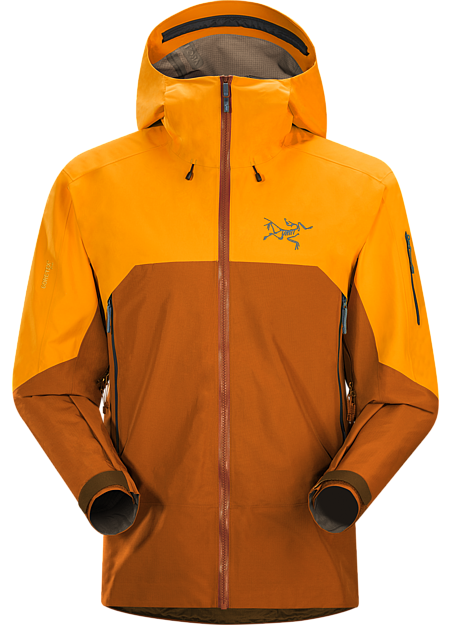
This jacket is not like other resort coats that are baggy and hang low. The Rush has a slim fit with just enough room to add a layer or two beneath it; it is comfortable but not cozy. If a designated resort coat is the equivalent of a new Jeep Grande Cherokee with all of the bells and whistles; then the Rush is modified Wrangler more suited for extended excursions. By resort coat I mean a jacket whose sole purpose is to be worn on the ski hill allowing you to wear nothing but a shirt beneath it and be comfortable and protected. With the system that I have created for myself, having a one-and-done coat would not work for me. Which is why the Rush is the finishing touch to my arsenal; it beautiful complements the system I have in place. The Rush does have a few small luxuries such as; the large eternal pocket and the easy-to-use zippers. The pouch, which is sewn onto the inside left panel of the garment, allows the wearer to stash gloves or a hat when they are not in use without worrying about them falling out. This keeps them warm and dry whilst you fiddle; an invaluable addition to an incredibly simple design. Because of the design of this jacket, the user would struggle using the zippers because they are hard to find as they are neatly tucked away. Arc'teryx has solved this problem by choosing a color that is different then the fabric so that they stand out and time is not spent looking for them. My shell is bright red, and the zippers are easy to find as the black color jumps off the surface; find the black line and follow that to the zipper.  The designers have also enlarged the zipper-pulls so when you find them, you simply grab and go; your not left groping yourself trying to dump heat.

Another handy feature of this garments is that it comes equipt with a Recco Rescue System beacon that allows search and rescue to locate you faster in the event of an accident. Click here for more information. A small but pleasant feature; one you hope will never be used, but is there just in case.

This jacket is in its element in the winter time, and with the correct layering beneath, it is just as effective at the resort as it is in alpine environments. I found with a light-weight insulation layer I was comfortable in temperatures as low as five degrees and had plenty of room to spare if I needed to add more layers. I did make a note of the lack of a double zipper in my summer review, but in a winter environment a double zipper is not necessary. If the wearer needs to dump heat, they simply find the pit zips and dump heat out from under the arms; there is no need to open the front of the garment from the bottom which would be required from a climbing shell.  

My only slight with this piece is the length of jacket; it fits like a rain jacket stopping just below the waist line. I prefer jackets that have a parka cut and hang below the waist line because it is more effective at keeping the elements out. When I am riding the chair lift the garment slides up and I have to re-adjust the snow skirt before I start my run. On the way down the length is of no concern, however, another half an inch of material would have been nice.

Ever sense I got this shell I have not used my other shell and have sold that piece to a friend who is in need of a shell. While this Arc'teryx jacket is most defiantly a ski shell, it works relativity well in the summer months; click here to read the summer review.


Go, No Go

As in my last review, this jacket is a go. If you are looking for a ski shell that pulls double duty as a rain jacket, this is the jacket to buy. Arc'teryx has done a marvelous job of balancing the demands of a technical skiing hard-shell with a year around tool that has features which will be appreciated every time it is worn. This jacket will take a large bite out of your wallet; it is the fourth most expensive shell you can buy from Arc'teryx; however, it is well worth the investment. A ski shell in the winter, and rain jacket in the summer which you will easily get five, if not ten, seasons from this piece before it needs to be replaced. I give it a 9 out of 10, because of the price and how short the garment is. That said, it is my opinion, that this is the one and done shell jacket. One shell to rule them all; one shell to find them, one shell to bring them all and in the...

Well, you can finish it. ;)


Merry Christmas,


Z

Tuesday, August 30, 2016

Bottle or Bladder..?

Conclusion Reached

The water bladder, making hands free drinking a reality sense whenever the water bottle became 'obsolete'. Each has its advantages, but upon further consideration I find myself leaning toward the bottle. On my NOLS trip I brought a 3 liter bladder, it worked well and I didn't have to fish a water bottle out of my pack when I wanted a drink. I got home and noticed some nicks on the surface, which turned out to be holes. A little duck tape took care of the issue, but the thought stayed with me. Had something punctured the bladder, I would not have had any back up. I would have been hung out to dry. It is my opinion that where sharp objects reside, my hydration system will not.

Case closed.

Z

The Right to Vote

The Price to Play

I have found it takes about $2,000 - $3,000 to purchase enough equipment for one to be comfortable in most mountaineering situations. Once you have acquired the gear to make a complete set - in theory - it means no more expenses for gear. As time passes, you refine things and create the 'perfect' system for YOU. Then along comes sweet temptation offering up the latest models and styles with enhanced features, complete with that "new car smell", so to speak.

Staggering back inside from a long day hike you notice that your old rain jacket has a huge tear. So many miles and stories in that coat. But alas, it is time to retire the old gal. Now what do you do? The answer is up to you. It's your system, not mine.

Our world is flooded with products that claim to be "the last one you will ever need". Don't be fooled by the illusion that we as consumers play no part. The SOLE reason companies exist is to meet our demands. Want an ultra-light rain jacket?  Check out OR's Helium II. Want a technical climbing shell?  There's Arc'teryx's Alpha SV.

Companies go out of their way to make products that we tell them we need. Cash is king. We vote by buying their products and supporting their mission statement. While the price to play may seem high, remember that every dollar - no, every cent - that we send to a company in exchange for a product is a vote cast in that company's favor. One of the reasons I write this blog is to advertise for the products I love. One day I hope to be paid well to write for a companies while advertising their goods.  For now, I write because I love it. Since freedom of speech is still around, I shall continue to write, and vote in my own way.

Z

Saturday, July 23, 2016

Two Cent's; Issue 7; WAD Tested; OR Ferrosi


In between the land of the soft-shell and the land of the wind breaker, OR's Ferrosi Hoody kept the wind and sun out while remaining breathable.

All I Ask is All You've Got

Different people have their home away from home.  This hoodie was my home for a month. I lived in this thing!  It was always on, sometimes over layers, other times under. Bushwhacking, over the high alpine passes, and countless days traveling on glacier, it preformed wonderfully.

Pro's

  • Durable 
  • Adjustable hood
  • Easy to use zippers, and drawstring
  • Comfortable cut  
    • It was long enough to slip under the harness of a hip belt and not come untucked

Con
  • Pocket placement  
    • It was hard to use the front pockets when wearing a harness or a hip belt
  • No thumb holes

Conclusion 

This product was exactly as Outdoor Research described. The stand out feature to me was it's durability. This particular weave allowed the piece to stretch and move, going flawlessly from forest to alpine. Layering a light fleece under the Ferrosi provided an unbeatable combination of breath-ability and flexibility.

Another thing that took me by surprise was the hood. It provided that extra little warmth that made life comfortable. It was also thin enough to be worn under a helmet. By doing this, I was protected from the cold tickling winds, and rays from the death star later in the day. 

The Ferrosi was made to be a climbing jacket, so why oh why, OR, did you put the pockets so low? They were unusable with a pack or harness. Another small thing design change that would have taken this jacket over the top would be thumb holes. The sleeves were long enough and easily fell past my wrists. A small change, but a functional one at that.


Go, No Go

Go. Hands down. A light weight wind breaker and soft-shell jacket that is easily compressible. This jacket will be with me on every outing. 9 out of 10. 

Thursday, July 14, 2016

Two Cents; Issue 6; WAD Tested; Arc'teryx Rush; Summer Review


The Ultimate Test

NOTE: Any review with 'WAD Tested' in the title means that particular piece of gear was with me for a month in the Waddington Range, a remote Canadian wilderness area. In a nutshell, this NOLS course was why gear like this was made.

It is one thing to use a piece of equipment on the weekends, and another thing to depend on it in the most trying of circumstances. Each piece of which I write in this series was put through the paces of the most extreme environment.

If you would like to read about my journey with NOLS, the full story can be found on my other blog: The Bird, The Bauer, The Bum starting under the January 2016 tab.


A Double Threat

The last article that was written was a post touching on the differences between the OR White Room and the Arc'teryx Rush jacket. Originally the White Room was going to become my winter/skiing hard shell. The Gore-Tex Pro provides extra durability to the piece but doesn't overheat when the user is moving. It is a full alpine jacket; the only tell that it is a skiing shell is the snow skirt. More on that later.


Pro's

  • Durable 
    • Gore-Tex Pro
  • Parka Length Cut
    • Snow skirt provided the extra protection that an alpine shell does not have
  • Velcro was easy to use
  • Full storm hood
    • 3 Point Adjustable
  • Easy to use pit zips
  • Large zipper pulls

Con's
  • Main zipper was not two ways
  • Cuffs were hard to get on over my gloves


Conclusion 

One feature that was a pleasant surprise was the snow skirt. It seems like a weird thing to get excited about when one is doing an alpine expedition. However, after the skirt was snapped closed it kept moisture and wind out and warmth in. It also kept the garment from riding up under the pack's hip belt. If my jacket was on, I had the snow skirt snapped closed. This feature would have been a nuisance had there been climbing involved as the skirt would have been caught beneath the harness. That would have made life uncomfortable. Since there was no technical climbing on this course a garment riding up was not an issue.

While moving in the alpine, one is always wearing gloves, sometimes liner gloves, other times heavy winter gloves. It was easy to use this garment while wearing gloves.  The Velcro on the cuffs was sturdy and could be adjusted without taking gloves off. Arc'teryx also has sewn tails on the zippers that look and feel big when you use them without gloves, but the size is perfect when you have winter gloves on. Translation: adjusting the jacket did not require the wearer to remove his/her gloves. That makes life so much easier, drier, and warmer.

A few slight sticking points that were more of a nuisance than a problem were; cut of the cuffs, and the main zipper not being two ways. Having a two way main zipper has become more common because of the ease of use. For example, if you have to adjust something on your harness you can unzip from the bottom without having to open the shell and expose the wearer to the elements.  Two way zippers also allow the user to wear the jacket over the harness as opposed to tucking it beneath the hip belt. Arc'teryx describes this shell as a 'ski specific piece for the back country'. That said, after my layers were put on it was a struggle to slide the cuff of the jacket over the glove. However, once it was there it was snug and never came undone. Had there only been one or two layers on beneath the gloves, not four or five, it might have been easier. It just goes to prove that nothing is perfect.


Go, No Go

The Arc'teryx Rush preformed wonderfully. While it did have some small 'stylistic issues,' I absolutely will take it out again. It will perform just as well during the ski season, and in any harsh environment where snow is present. As a winter hard shell this coat passes with flying colors, receiving a 4.5 out of 5. No surprise there.

K

Monday, May 30, 2016

And the Winner Is...

A New World to Explore

As the ski season comes to a close, what will soon be last years model, have gone on sale. I also happened to have the resources to look for another jacket. So the quest began. There are two companies in the running, Arc'teryx and Outdoor Research. OR was first on the list because of my experience with their products, and how their garments fit on my frame. Arc'teryx, because they are the top of the market when it comes to shells.


This search was unique because, unlike other pieces, I did not research the 'best' ski jackets on the market. The only thing that I new about the jackets was that the brands had a reputation of high quality equipment. Only after the excursion was completed was research done reaffirming my thoughts and reactions to each piece.


At A Glance


This garment is the closest that OR comes to making a 'resort coat'. With Gore-Tex fabric on the outside, fleece lined interior, and perfectly placed pockets this coat had all of the bells and whistles of a comfortable ski jacket. The fit was a bit snug but not in the way that I imagined it would be, my shoulders felt squished. All of the rest of my OR kit is large, but, after watching my caloric intake, I now am a medium in some companies, and large in others. Everything else about the piece was well thought out. The fabric cut on the sleeves was cut loose enough that they fell over the gloves without the normal struggle. Also the zippers were easily operated even with my heaviest winter gloves on. The jacket felt solid, rugged, dependable, but not comfortable. 


There are many ways to describe me, but runners build is not among that list. Companies like Black Diamond and Arc'teryx cut their fabrics differently to appeal to people that have less mass to them. However, the jacket was there on the rack, so off the hanger it came and onto my shoulders. 

It felt good, really good.

The thought that crossed my mind was, 'its just the name that has gotten you excited.' But the longer I had it on, I became more convinced that it wasn't just the name, but that it fit better then the OR. The sleeves were a nice fit over the gloves, but it was a struggle to get them over the cuff. With a little bit of work they slide over, but did not fall into place like the sleeves of the OR. Two other nit-picky things that the White Room had was; a) a two way zipper, and b) removable snow skirt. 

That night was spent researching the two products.


Now What?

A stalemate was all that came from my research. The Rush is a high end ski shell that was both simple and practical. The White Room, a solid jacket is geared toward the resort rider but can also function in the back country. Never before have two pieces been as equally suited to me needs. In the end it was the Rush that pulled through. Foremost was that the piece felt like an extension of my skin, it fit really well and was incredibly comfortable. Also, the Rush worked well with the kit that I have assembled. The Rush is a Gore-Tex Pro shell with no insulation. I already have enough layers to stay warm outdoors. OR's jacket had the fleece lining would have made the jacket hard to use in mild conditions where a shell could be used to keep the elements out. 

I look forward to using this next season on the slopes. 

K